Conducting Deep Rival Search Analysis for Success

This ensures you cover all the surfaces your competitors are currently winning on. Make a copy of this complimentary design template to follow along with the actions listed below. Find your SEO competitors by taking a look at the sites that appear together with yours in appropriate search results. They might be direct company competitors or just organic rivals.
Money Robot automationGymshark is among Men's Health's due to the fact that it competes for the very same keywords, despite the fact that Gymshark is in a different market (clothing). Compile a list of both direct and organic rivals. You can determine your natural competitors quickly by looking up your most pertinent keywords in online search engine and AI platforms.
For example, if you were doing a competitive analysis for Men's Health magazine, you might search for the following: "best publications for men" "finest fitness publication for men" "physical fitness prepare for guys" "nutrition for men"Use the very same keywords to search on Google, YouTube, AI platforms, and Reddit. In this manner, you're not limited to the information of simply one platform.
Comparing Old Ranking Methods Against 2026 Trends
Just search for your domain and scroll down to "Main Organic Rivals."You'll see a list of domains that rank for numerous of the same keywords as you. Click "" for an in-depth summary, consisting of competitors level and the total variety of keywords they rank for. Objective to analyze around 3 to 5 rivals to start with.
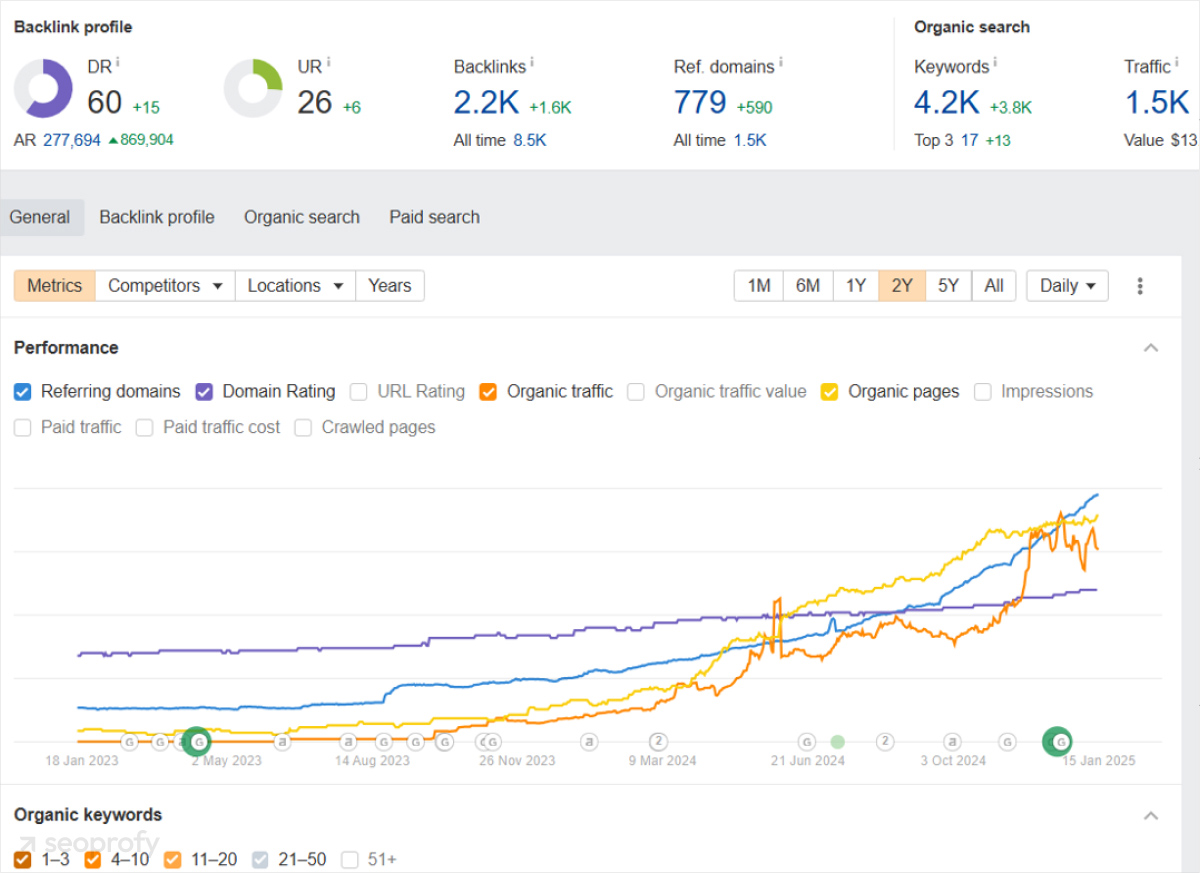
Analyze your competitors' traffic trends and which of their pages drive the most traffic to find chances to drive more traffic to your own website.
Top quality traffic trends can indicate whether your competitors are getting or losing brand name awareness. Rather than searching for associated terms they take place to rank for.
You'll also see your rival's keyword rankings in time, filterable by position. For Guy's Health, we see a down pattern in keyword rankings that associates with a decline in organic traffic. When you find a down pattern for a competitor, identify whether the decrease originates from:: This usually indicates a Google algorithm update or an increase in the variety of inquiries being answered by AI Overviews (causing a drop in clicks).
Driving High Search ROI in a Tough Niche
: If this holds true, take a look at which pages lost rankings and whether those pages target keywords you're actively going after. If they do, there might be traffic chances here. If the pattern is upward, determine when the growth started and whether it corresponds with an algorithm update, a brand-new content push, a spike in branded search, or something else.
A contemporary SEO competitive analysis needs to look beyond simply natural traffic from online search engine. Looking at other traffic sources, like AI recommendations, can reveal channels you aren't yet leveraging that your rivals are. For a deeper dive into several traffic sources at one time, use Semrush's Traffic & Market Toolkit.
Money Robot automationYou can go into specific channels even further for more particular insights. Like which particular AI tools are sending your competitors recommendation traffic, how those sources have actually trended gradually, and even the specific pages that are seeing the most growth from those traffic sources. This is practical for determining brand-new channels that might drive traffic to your own site.

In the template, fill in the tables with competitor data and use the observation concerns to record how each trend affects your strategy. To analyze the keyword footprint of your competitors, identify all the search terms they rank for, the subject clusters they belong to, and how your own rankings compare.
Include your domain and your competitor's, then click "."Scroll down to the "All keyword details for" section and choose "" to see all the keywords your domain doesn't rank for, using the "" filter at the leading to only show keywords your rival ranks for in the top 10.
Scaling Search Growth Through Strategic Tactics
Search for keywords that relate to your own service offerings. Don't just focus on search volume or keyword difficulty. These are useful metrics for rough prioritization. An "easy" keyword with 2K month-to-month search volume isn't worth targeting if there's very little possibility of it leading to conversions. Add relevant keywords to a spreadsheet, and when you're finished, download it as a CSV file.