Dominating Search Visibility Using Proven Ranking Hacks
Inspect your competitors' exposure in AI features like Google's AI Overviews and AI Mode to comprehend what's working for them beyond basic organic rankings. Do this with the Semrush AI Exposure Toolkit to track your exposure compared to your competitors gradually, and to see what specific triggers they stand for that you don't.
Enter your domain and up to four rivals to see your visibility, audience size, and number of mentions over time. This reveals you all the prompts your rivals are appearing for that you're not, arranged by topic.
Search for prompts that are appropriate to your company that you do not currently stand for. These are triggers you can optimize for within existing content, or you can develop new material around them. Include your AI presence findings to the design template. Log the triggers, the outcomes, and any patterns.: To go even more with this part of the analysis, have a look at our guide to finding AI exposure gaps.
Using Advanced Analysis to Cement Search Authority
Start with the angle. Is the competitor taking a strong position, or producing a neutral summary? Are they composing for a specific audience section (a CFO, a first-time buyer, a designer) or keeping it generic? If you're developing or updating a comparable page, this analysis can inform the audience you might desire to talk to.
Next, map the H2s on your rivals' leading pages. You should not simply blindly copy this, but if you see several high-ranking rivals structure a page in similar ways, that structure is likely what Google is fulfilling.
Next, inspect how rivals frame the page in search outcomes. Does the title lead with the primary keyword? Do they use numbers, modifiers like "guide" or "list," or audience-specific qualifiers? These choices reflect how they're translating what the searcher desires, and this can assist you comprehend how to write your own title tags to stick out in search results page.
Money Robot diagramsIs the Search Strategy Ready for Future Algorithms?
Do authors have bios with credentials specific to the topic? Is the material citing initial sources, exclusive data, or specialist quotes? Document your on-page analysis findings in the template. Examine your rival's backlinks to find chances to build links to your own website and boost your authority. First, take a look at patterns to understand your competitors' link structure efforts, then run a backlink gap analysis.
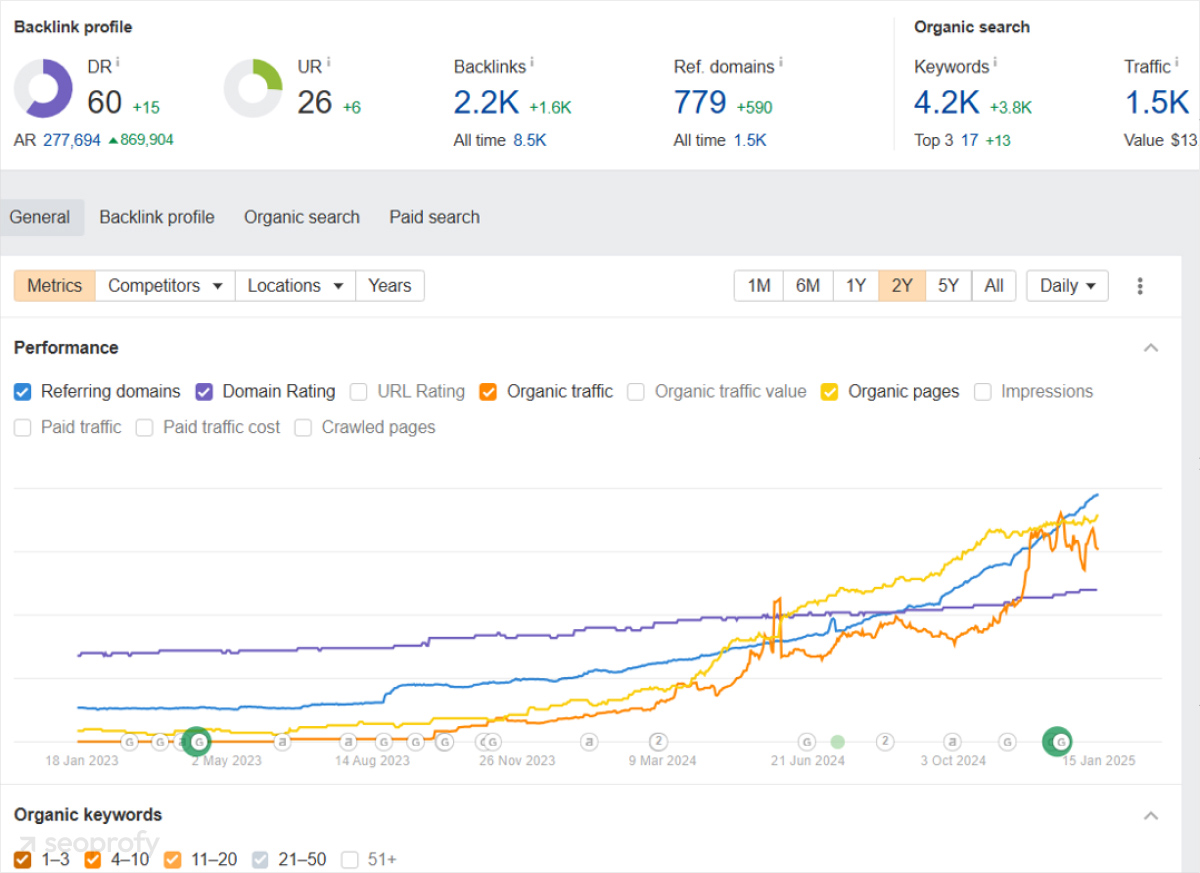
To discover these patterns, utilize Semrush's Backlinks tool to run an audit for a competing domain. Pay attention to the following charts:: An estimate of how much a domain's total authority altered over the previous year Displays modifications in the variety of special websites linking to your competitor over the in 2015 Shows the number of links from other websites to your competitor over a 12-month periodIf you see a quick boost in any of the three charts, it might suggest that your competitor has been running an effective link building campaign.
In Semrush's Backlink Gap tool, you can compare yourself and up to 3 rivals at the same time. Include your domain and your rivals', click "," and the tool will return a list of sites linking to your rivals but not to you. For each referring domain, you can click the variety of backlinks in your competitor's column.
Select the domains you desire to connect to and click "" and after that "" to conserve them to your SEO job. Tape backlink insights in the template. Utilize the material concepts area to note what types of content earn your rivals the most links. Inspect out our guide to to begin building high-authority backlinks to your own website.
Maximizing Search Performance in a Competitive Environment
This can increase your possibilities of ranking higher and being pointed out or cited in AI-generated actions. Go into your competitors' social media existence by evaluating their publishing frequency, top platforms, user engagement levels, and promotional angles they utilize. Social media presence isn't a Google ranking element. Social media posts can appear in search and AI results.
If your rivals publish numerous times weekly, it's an indication social networks may be driving significant engagement and results for them. Look at their top-performing posts to understand the sort of content they share that resonates with their audience.: Your audience likely uses multiple neighborhood platforms to research study brand names and speak about their issues, not simply individual brand name sites.
Fill out the social networks, neighborhood presence, and brand points out areas in the design template. If you take on other organizations in a specific geographical area, element local SEO into your competitive analysis. Do this by reviewing their Google Service Profile (GBP), reviews, and visibility for local searches. For each of your direct rivals, check if they have a GBP established.
Analyzing Old Ranking Methods Against 2026 Trends
In addition to analyzing evaluations, measure your rivals' presence in local searches. For instance, if you have a dog grooming business in San Francisco, you might examine rival exposure for queries like: Dog grooming in San Francisco Family pet groomers in San Francisco Canine groomers near Pacific Heights, San FranciscoFor these questions, log which rivals reveal up and where they rank in local search results compared to you.
Log GBP details, local search rankings, and AI platform leads to the template. The eight actions we've covered above must offer you substantial insights into your competitors' exposure throughout search and AI platforms. You must comprehend their strengths and weaknesses, and have an excellent idea of where to focus your content technique to get and stay ahead.
To get continuous rival insights, set up Semrush's My Reports tool and start with one of the SEO competitive analysis design templates. The "Month-to-month Rival Analysis" template breaks down competitor traffic efficiency, backlinks, paid search, and social media. Get started with a complimentary trial today.
Is Your Search Strategy Ready for Future Algorithms?
Have you ever tried to compare your SEO to rivals? Competitive analysis in SEO may seem like it must be scheduled for firms with their expensive tools and years of experience.
Ready to find out how to inspect rival SEO? Do it yourself competitor analysis is possible even without access to agency tools. A mix of free and paid tools makes it possible to evaluate competitor performance.
You've heard of competitive analysis, but do you actually understand what it means? What about how to do competitor analysis for SEO? An SEO rival analysis reviews how other sites rank, primarily in natural Google search results, what elements contribute to their visibility, and where chances exist for your own content.