Essential Search Engine Visibility Tips for Total Dominance
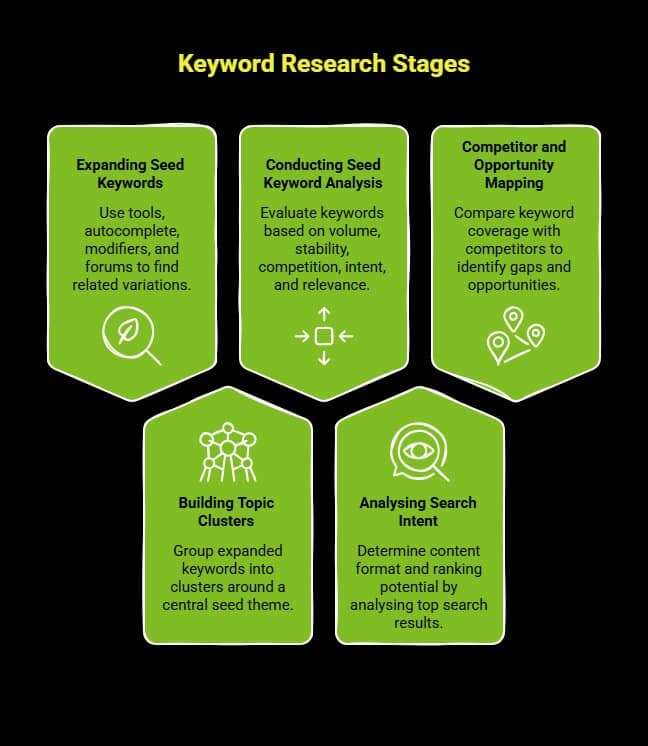
Select companies that operate in the exact same space and market as you, then focus on the ones that represent the most significant hazard to your organization. Once you have a list of your main competitors, run it through an SEO tool like SEMrush to find keyword spaces keywords that your rivals rank well for, but you do not.
You can filter to reveal simply the keywords competitors rank for that you're missing out on out on. Let's say you're Home Depot. You might enter Lowe's domain in addition to your own for a side-by-side comparison. From there, you can pick the keywords that Lowe's is ranking for that you're missing.
These might show that your strategy needs reworking, or possibly you have actually recognized a specific niche your competitors have missed out on. The initial keyword gap outcomes may include some irrelevant or low-value keywords. To improve the list, filter by search intent and crank up the keyword trouble limit; that method, you'll remove outliers and surface area the most pertinent, high-value keyword opportunities you're missing out on.
Don't simply look at what keywords your rivals are ranking for, but how much effort they're putting into those pages. Are they producing high-quality, thorough material?
All of these aspects point to the effort they have actually bought creating the content for this page. There's more to SEO than simply keywords; taking a look at your competitors' backlink profiles is a great method to get to grips with their off-page SEO methods. Utilize a tool like SEMrush's Backlink Analytics to examine things like: The authority level of the sites linking to them.

Establishing Market Dominance Using Smart SEO
The kinds of pages (e.g. article, directory sites, news websites) that link to them. Does it appear like your competitor has hung around and money trying to get backlinks from specific sites, or specific kinds of websites? The law of effort applies here too, so if the response is 'yes', you've learned something beneficial.
It's also beneficial to analyze the on-page elements of your rivals' sites. On-page SEO work, like optimizing headers and metadata, isn't that time-consuming, but it informs you how your competitor desires individuals to see the page. Page-speed metrics, too, can tell you a lot about the pages your competitor is focusing on.
These pages are probably worth something to the service and may be generating important leads. If this sounds like a lot of work, do not fret testing competitors' web pages for speed could not be easier.
Conducting Deep Rival SEO Audits for Success
By following the seven steps above, you'll get a well-rounded understanding of your rivals' SEO strategies from both an on-page and off-page viewpoint., examining out online evaluations, and looking at paid keyword information in Google Adwords.
Lastly, ensure you consider what your findings suggest for your own marketing method. Do not just blindly copy what your competitors are doing instead, use what you have actually learned to determine weak points in your technique and fill spaces in your existing content. This will assist you produce a marketing strategy that's tailored to your organization objectives.
Analyzing your rivals helps you develop your own SEO and AI optimization strategy. This process includes examining their traffic, material gaps, and AI exposure to assist you understand what's working for brands like yours. In this guide, we'll break down what a competitor analysis associates with more information, and why you should carry out one for your company.
Many search inquiries return AI-generated answers through Google's AI Overviews and AI Mode. And lots of people turn to other AI tools, like ChatGPT and Perplexity, in addition to conventional search engines. It's likewise essential to factor in how your competitors perform on these platforms throughout your analysis. Whether you're a small company owner or a business marketer, an SEO rival analysis enables you to: Determine the keywords or AI triggers where you require to be more noticeable Find traffic channels you may be neglecting Uncover sectors of your audience you might be missing out on based upon the content they're releasing Produce a material calendar using the content spaces between you and your competitors Discover third-party websites that link to your competitors and might link to you Find online neighborhoods that speak about your competition but not youThe point of a rival analysis isn't to copy your rivals' methods.


%20SEO%20Basics%20for%20Students%20How%20to%20Rank%20Your%20First%20Website%20in%20Google%20(2026%20Guide).png)