Maximizing Search Performance in a Hyper-Competitive Environment
This ensures you cover all the surface areas your competitors are currently winning on. Make a copy of this free template to follow along with the actions below. Find your SEO rivals by looking at the websites that appear alongside yours in relevant search engine result. They might be direct service rivals or just organic competitors.
rank higher with diagramsGymshark is among Guy's Health's since it contends for the exact same keywords, although Gymshark is in a different industry (clothing). Assemble a list of both direct and natural rivals. You can identify your organic rivals quickly by searching for your most relevant keywords in search engines and AI platforms.
For instance, if you were doing a competitive analysis for Guy's Health magazine, you may browse for the following: "best publications for men" "best physical fitness publication for males" "fitness prepare for men" "nutrition for guys"Use the same keywords to search on Google, YouTube, AI platforms, and Reddit. In this manner, you're not limited to the information of just one platform.
Generating High Search ROI in a Competitive Niche
Just search for your domain and scroll down to "Main Organic Competitors. Aim to examine around three to 5 rivals to start with.
Evaluate your competitors' traffic patterns and which of their pages drive the most traffic to discover chances to drive more traffic to your own website.
Branded traffic patterns can show whether your rivals are gaining or losing brand awareness. If top quality traffic is increasing, it recommends more individuals are finding them through other channels and looking them up straight. Instead of looking for related terms they take place to rank for. A boost in branded traffic might associate with a boost in AI exposure.
You'll also see your competitor's keyword rankings in time, filterable by position. For Guy's Health, we see a downward trend in keyword rankings that correlates with a reduction in organic traffic. When you spot a down trend for a competitor, identify whether the decrease originates from:: This typically points to a Google algorithm upgrade or a boost in the number of queries being responded to by AI Overviews (leading to a drop in clicks).
Driving Search Reach Through Smart Ranking Strategies
: If this holds true, look at which pages lost rankings and whether those pages target keywords you're actively going after. If they do, there might be traffic opportunities here. If the trend is up, identify when the growth started and whether it accompanies an algorithm upgrade, a new content push, a spike in branded search, or something else.
A contemporary SEO competitive analysis requires to look beyond simply natural traffic from online search engine. Looking at other traffic sources, like AI recommendations, can reveal channels you aren't yet leveraging that your rivals are. For a much deeper dive into several traffic sources at one time, usage Semrush's Traffic & Market Toolkit.
You can go into particular channels even further for more specific insights. Like which specific AI tools are sending your rivals referral traffic, how those sources have trended over time, and even the particular pages that are seeing the most growth from those traffic sources. This is practical for recognizing brand-new channels that might drive traffic to your own website.
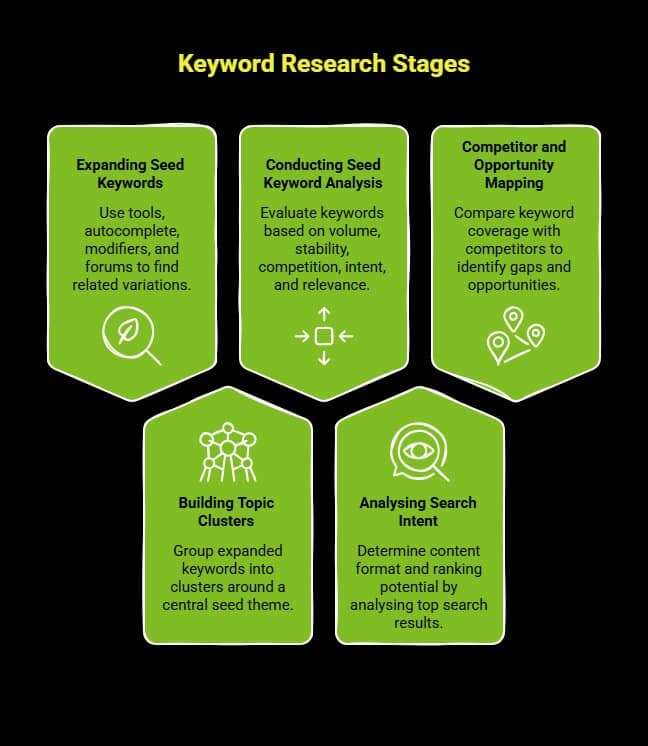
In the template, fill in the tables with competitor data and utilize the observation questions to document how each pattern affects your technique. To examine the keyword footprint of your rivals, recognize all the search terms they rank for, the subject clusters they belong to, and how your own rankings compare.
Add your domain and your competitor's, then click "."Scroll down to the "All keyword details for" section and choose "" to see all the keywords your domain does not rank for, using the "" filter at the leading to only show keywords your competitor ranks for in the leading 10.

How to Command Modern SEO in 2026
Try to find keywords that relate to your own service offerings. Do not just focus on search volume or keyword difficulty. These work metrics for rough prioritization. An "easy" keyword with 2K month-to-month search volume isn't worth targeting if there's very little chance of it leading to conversions. Include pertinent keywords to a spreadsheet, and when you're ended up, download it as a CSV file.


%20SEO%20Basics%20for%20Students%20How%20to%20Rank%20Your%20First%20Website%20in%20Google%20(2026%20Guide).png)