Proven Organic Visibility Tips for High-Level Keywords
As a result, you'll also increase user engagement on your site, which affects Google ranking consider lots of positive ways. To even more ensure your content meets ranking requirements, attempt using a tool like. Its AI-driven insights assist you on structure, readability, and keyword optimization for much better rankings. The Bottom Line Top quality material is the foundation every other ranking aspect develops on.
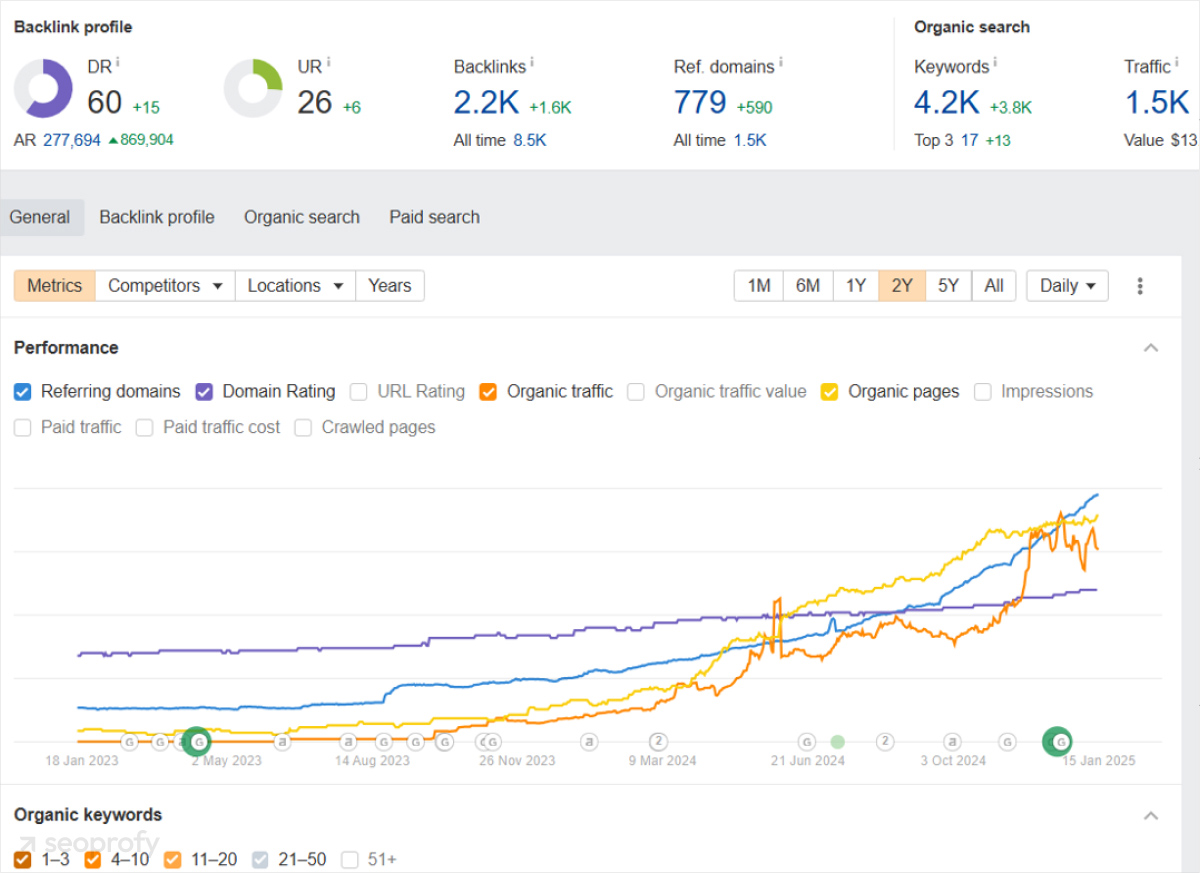
Money Robot VPSIf you're only going to focus on something, start here and make certain your E-E-A-T signals are strong. After content quality, our next crucial Google ranking element is backlinks. Incoming links from other sites have a huge impact on Google's ranking algorithm. In truth, webpages with fewer backlinks get much less natural traffic due to the fact that they're buried deep in the search engine result.
Google measures those votes and evaluates the quality of your links. All in all, backlinks from high-authority sites are more important and will boost your rankings more than links from lower-rated sites. Acquiring these links sends out a signal to Google that your content is credible, given that other top quality websites guarantee it.
Rapid Organic Growth Tactics
Browse intent is just a term that describes what the user is attempting to accomplish with a search. Do they intend to purchase something to resolve a problem or require? Do they wish to learn how to do a task? Or are they just inquiring to better comprehend a subject? Every searcher is different, and you need to comprehend the behind a search query so that your material effectively resolves it.
The authors and Google think that these searchers wish to compare and most likely install a brand-new WordPress plugin. Here's another example. If you search the keyword "make banana bread," you'll see that the outcomes include recipes, how-to posts, and videos. If you were to develop content on either of these example topics, it's crucial to match the search intent and create the right type of content.
This means you ought to develop a video or an infographic for the best chance of ranking for those keywords. For eCommerce websites, search intent also gives you information about where visitors remain in the buyer journey. Are they searching for basic details about your market, do they want a tutorial or a how-to post, or are they in the final research stage and ready to buy your item? By matching your content with search intent, you can address these concerns and develop content that individuals are most trying to find.
Will the Page Perform in Future Search Landscapes?
Amongst the hundreds of Google ranking aspects, page speeds are another top concern. Website speed includes metrics that Google considers vital for user experience.
It's more about meeting a minimum standard for page loading time. Google desires your website to load rapidly and supply a fantastic user experience for your audience. To easily check your website packing speed in WordPress, you can utilize the MonsterInsights Website Speed report. It will evaluate your site, show a score for mobile and desktop, reveal important metrics about your page load times, and highlight tips to make your website even faster.

CDNs can speed up your material load times for users around the world. Ever given that Google focused on mobile search in 2019, it's essential that your website be responsive on any size screen.
Previously, Google used your website's desktop version for indexing. With over 4.2 billion mobile web users worldwide, it's no surprise that Google made this shift. So, if you want to optimize your rankings, your site should be mobile-friendly. You need to start by picking a WordPress style that is mobile responsive.
The next ranking aspect you need to work on is your website's domain authority (DA). It's a metric that grades your website's proficiency on a particular subject and its capability to rank on online search engine. Domain authority was developed by the SEO company Moz, and it produces a score from 1 to 100.
Money Robot VPSBuilding Powerful Backlink Profiles for Success
This is why you need to develop amazing content that's focused on your market or main topic. And attempt to focus your site and blog content on one significant topic.